
Outside the Lines
Entrusted Beyond What We Could Arrange

“I commend to you our sister Phoebe, a deacon of the church in Cenchreae. I ask you to receive her in the Lord in a way worthy of his people and to give her any help she may need from you, for she has been the benefactor of many people, including me. Greet Priscilla and Aquila, my co-workers in Christ Jesus.” Romans 16:1–3
There are seasons when God’s leading does not fit within the lines we have learned to draw. He moves ahead of our categories, beyond what we can arrange or secure, and invites us to follow Him without insisting on understanding the whole picture. That was the posture we were learning in the late 1990s as the work among Tibetan Buddhist peoples continued to widen, even as much around us felt unsettled.
It was during this season that I undertook a six-week journey across Siberia and into Southeast Asia, traveling with a trusted woman pastor based in Nepal. Our purpose was to follow up on the evangelistic cassette tape project among Tibetan Buddhist people groups, particularly the Tuvan, Buryat, and Kalmyk. The trip unfolded not as a carefully engineered plan, but as a series of invitations that arrived one step at a time.
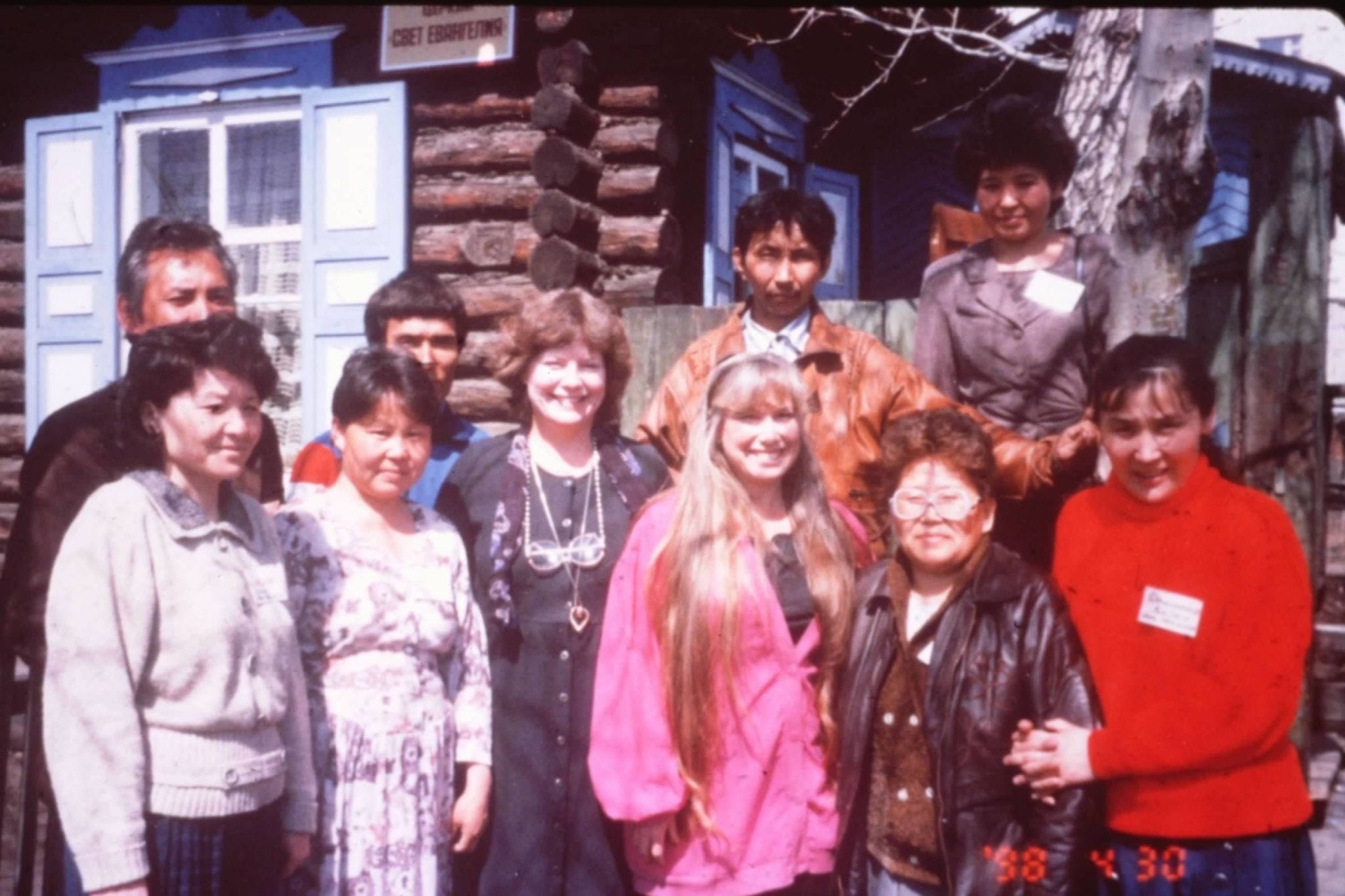
Paul’s words at the close of his letter to the Romans would later come to mind. He commended men and women alike who had labored faithfully in the Lord, naming them by fruit and service. Their authority came from obedience and relationship, not from a system’s permission. That quiet affirmation framed much of what we were experiencing.
Our journey began in Irkutsk, Russia, where we had a contact through a pastor connected with Bethany World Prayer Center. We ministered in church services and in small group settings, not knowing what might come of it. During one of those gatherings, a woman responded and committed her life to Jesus. The pastor later pointed out that she was a Western Buryat from a nearby region, and he remarked with wonder that she represented a first fruit of our efforts among Tibetan Buddhist peoples of Siberia.
While we were there, we were introduced to a young Russian man who carried a growing burden for the Western Buryat region. Even the pastor hosting us admitted his surprise. He had not known what to expect from two older women arriving to minister. Yet the Holy Spirit moved with clarity and kindness, opening doors that expanded the work far beyond what any of us had anticipated.
From Irkutsk, we traveled on to Kyzyl in the Republic of Tuva, where leaders had invited us to participate in a training they had prepared. Upon arrival, it became clear that there was concern about how we would minister. We were warned firmly not to pray for people and not to speak about the baptism in the Holy Spirit. The caution puzzled us, especially since we had made no attempt to promote ourselves or our approach.
We honored our hosts and shared from the Word as we were given opportunity. Yet in between sessions, as we walked outside, people quietly sought us out, asking for prayer, for deliverance, and for the filling of the Holy Spirit. Without being disruptive or disrespectful, we prayed with those who came, and the Holy Spirit did what only He can do. The following day, our primary host was unexpectedly absent, having suffered a seizure. The meetings unfolded with greater freedom, and none of it came by our insistence.
While in Tuva, we visited a small church led by a young Tuvan man who had been the first from his people group to follow Jesus. Though newly in faith, he carried a pastoral grace that resonated deeply with the congregation. Because of concerns about his lack of formal training, another Russian pastor from outside the region had been placed over him. This arrangement created tension, as he was perceived as an outsider among a largely Tuvan congregation.
When we preached, the Russian pastor responded by publicly rebuking us and delivering a sermon that seemed designed to counter what we had shared. We did not defend ourselves. We committed the situation to the Lord and prayed that He would shepherd His church as He saw fit. The Tuvan pastor, by contrast, was warm and affirming. What stood out most was his devotion to worship. He had begun writing songs in the Tuvan heart language, helping new believers worship Jesus in a way that was deeply their own. We were reminded again how essential it is for faith to take root within a people’s own culture rather than in borrowed forms.
This was not the first time I had encountered resistance because I was a woman in ministry. Many denominations did not recognize women serving in roles of leadership or teaching. I had not sought out such assignments, but neither did I hold back when God asked me to step into something unfamiliar. I learned to test such invitations carefully, seeking confirmation in prayer, in Scripture, and from trusted counsel. My husband was always consulted and consistently affirming. We understood ourselves to be a team, joined by the Lord in a shared calling.
With a large family, our travel was often divided. When Tom traveled, I stayed home with the children. When I traveled, he stayed behind. We were happiest when we could serve together as a family, though doing so required creativity and sacrifice. Our children carried their schooling with them, learning to live faithfully in the midst of movement and calling.
From Tuva, we continued on to the Republic of Buryatia and the capital city of Ulan-Ude. There, we partnered with a pastor connected to the Antioch network. We met a young Buryat woman and her husband who would later become pastors of that fellowship. Over time, a Buryat network formed, bringing together believers scattered across a wide region. One of the network’s primary purposes was to help new believers understand that they were not alone. As they learned from one another, the number of Buryat followers of Jesus grew steadily, reaching nearly two thousand.
Our journey also took us to Kalmykia, where Tibetan Buddhism layered over earlier shamanistic roots similar to what had happened among the Tuvans and Buryats. Bible translation work was still underway, including a children’s Bible in the Kalmyk language. We ministered alongside local believers who had labored faithfully for years, often unseen. Each place we visited added another thread to a tapestry God was weaving across Siberia.
We came to understand that the Buryat, Tuvan, and Kalmyk were only three among many shamanistic people groups spread across the vast reaches of Russia. As our hearts were drawn toward them, God began highlighting Vladivostok as a strategic access point for future work. We could sense that something larger was forming, though its full shape remained hidden.
Our final stop was Chiang Mai, Thailand, which had become a hub for collaboration after many ministries relocated from Hong Kong. There we met with friends and partners who shared a similar calling to reach Buddhist peoples. For that week it was simply another place of listening and connection.
God was preparing the way in places we could not have identified in advance. He was coloring outside the lines we understood, watching over His Word to perform it. What He desired to accomplish came in His time and in His way, as we listened and obeyed.
[The songs from this journey are also gathered in the Spotify playlist “Dancing on Raindrops.”Or, visit the YouTube playlist “Dancing on Raindrops”.]
Reflections
Where might God be inviting you to trust Him beyond what you can arrange, secure, or fully understand? In what ways have you seen fruit emerge in your life that you could not have planned or produced on your own? Who are the partners God has placed alongside you for this season, and how might He be inviting you to honor and walk with them more fully?
